
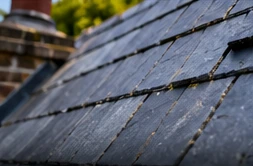
Natural slate
Traditional, distinctive and often found on older buildings.
Understand the differences between slate, clay, concrete, and modern flat-roof systems before deciding what needs attention.
Back to Roof GuideOur roofing servicesTraditional, distinctive and often found on older buildings.
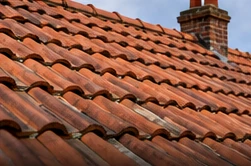
Warm colour and varied forms for suitable pitched roofs.
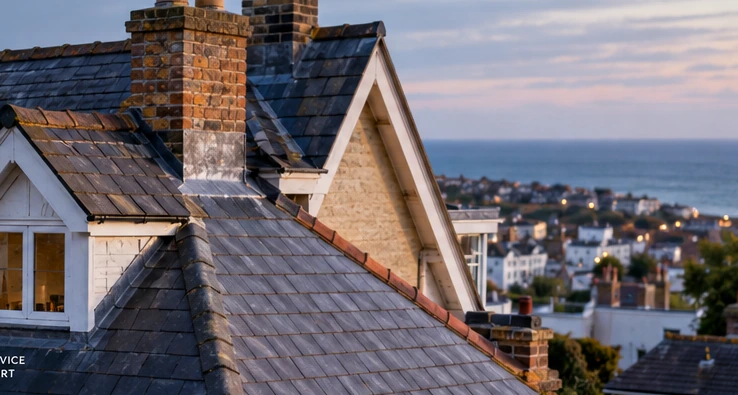
Practical pitched-roof coverings in a range of profiles.
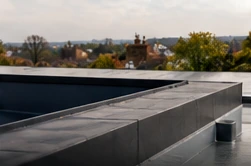
Waterproofing membranes, carefully designed drainage and details.
A pitched roof uses a slope to shed rainwater and typically has a covering of tiles, slate or another suitable material. A flat roof is normally built with a designed fall towards drainage: it should not be assumed to be perfectly level.
Natural slate is commonly associated with period properties. Slates are relatively thin and require the right specification, adequate fixings, appropriate detailing and an assessment of the existing roof structure. Local conservation requirements may also influence material choice.
Clay tiles provide a characteristic traditional appearance. Profiles, fixings, roof pitch, exposure and tile condition all affect suitability. A cracked tile is not always evidence that the whole covering has reached the end of its useful life.
Concrete roof tiles can be practical on many properties. They are available in different shapes and finishes, but the existing roof's pitch, supporting structure and the chosen system specification need to be compatible.
Domestic extensions, garages and dormers commonly use a waterproofing system such as EPDM, GRP or reinforced bitumen. The edges, outlets, upstands and junctions matter as much as the main covering. See our flat roof comparison.
Sussex Roof Care Ltd shares general roofing information to help local homeowners make informed decisions. This material is educational, not a diagnosis or an offer of immediate attendance.
Visit our contact page